Lavinia’s refusal of Ashley
Mothering SundayLavinia Huntley’s refusal of Ashley Huntley is a brief but consequential assertion of bodily autonomy within an unequal marriage. When Ashley arrives drunk and expects sexual access, Lavinia stands her ground: she may be pregnant, she says, and will not risk it. The exchange turns a private bedroom confrontation into a sharp expression of the book’s wider concern with women’s control over pregnancy, sex, and motherhood.
The confrontation at Treetops Manor
That night at Treetops Manor, Lavinia and Zillah are preparing for bed when they hear a commotion downstairs. Zillah suspects that Ashley has come home drunk again, and Lavinia anxiously hopes he will be too intoxicated to demand his conjugal rights. Her apprehension establishes that his arrival is not simply an inconvenience: she anticipates his expectation of access to her body.
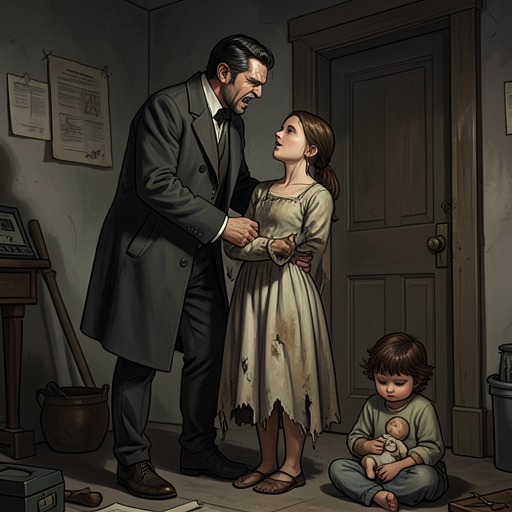
Ashley soon bangs into the bedroom, swaying and slurring. Lavinia, who usually does not refuse him, tells him plainly that she is not ready for him. He advances, his hand dropping to his belt, and insists that she will do as he says. Lavinia nevertheless holds her ground. The scene makes her change in conduct visible: rather than yield as she usually does, she refuses him directly and asks him to leave her in peace.
Pregnancy and the terms of refusal
Lavinia explains that she thinks she may be pregnant and will not take a risk until a doctor has confirmed it. Her refusal is therefore both immediate and conditional: she rejects Ashley that night and says she will continue to do so in the near future if pregnancy is confirmed. She is not certain yet, but tender breasts and persistent nausea, worst in the mornings, have made her believe that conception may have occurred. She longs for a child, while fearing that something could go wrong.
Ashley turns that uncertainty into a demand about the child’s sex. He says that if she is pregnant, it had better be a boy, then leaves. His quick sobriety contrasts with his drunken entrance, while his response reduces the hoped-for pregnancy to the question of producing a male heir. The moment does not resolve Lavinia’s fears or establish whether she is pregnant; it shows instead how quickly her hope for a child becomes entangled with her husband’s expectation of a son.
Zillah’s response and the limits of the moment
Zillah has been holding her breath during the confrontation. Once Ashley has gone, she praises Lavinia for standing up to her bullying husband and urges her to have a doctor examine her. Her relief gives the refusal a small but meaningful witness: Lavinia’s resistance is a departure from the subservience Zillah is accustomed to seeing. Yet the need for medical confirmation remains, and Lavinia’s decision is shaped by the possibility of pregnancy rather than by any evidence that Ashley’s broader marital expectations have changed.
The episode is a contained reversal, not a lasting settlement of the marriage. Ashley leaves without forcing the encounter, but the scene gives no indication that he has abandoned his sense of entitlement. Lavinia has secured this night and declared a boundary for the near future; her words do not establish what will happen once her condition is known.
Contrast with other women’s pregnancies
The refusal gains force beside the coercive pregnancies elsewhere in the story. Cissie Burns confides to Sunday Small that she is expecting a baby, and Sunday later recounts that Albert Pinnegar forced himself on her. When Cissie is sent away under the pretence that she will be cared for, she discovers that the carriage is taking her to Hatter’s Hall asylum; she protests that she had been promised the chance to care for her baby. Daisy Branning also tells Sunday that Pinnegar hurt her and threatened to send her brother Tommy Branning away if she reported him.
These episodes do not show that Lavinia knows what happened to Cissie or Daisy. Their contrast is thematic: the story places Lavinia’s ability to refuse her husband alongside the coercion and institutional betrayal that deprive other women of control over sex, pregnancy, and their children. Her refusal is a real assertion of choice, but it occurs within a marriage where Ashley’s authority, the prospect of a male heir, and her own longing for a child all press upon that choice.